How I got £31,150 back (and why not everyone could)
I lost £31,150 to a property scam and a year and seven months later I had it back, with interest. A banking rule, the Ombudsman, my MP and a WhatsApp group. This is what worked and what didn't.
I've spent two posts telling you how I lost £31,150. Now for the good part: how I got it back. And the less good part: why other victims haven't been so lucky.
If this has never happened to you, take away three things: if you're scammed by bank transfer in the UK, your bank may have to refund you; you have 13 months; and writing to your MP works. The rest is the manual for whoever needs it today.
The rule that saved me
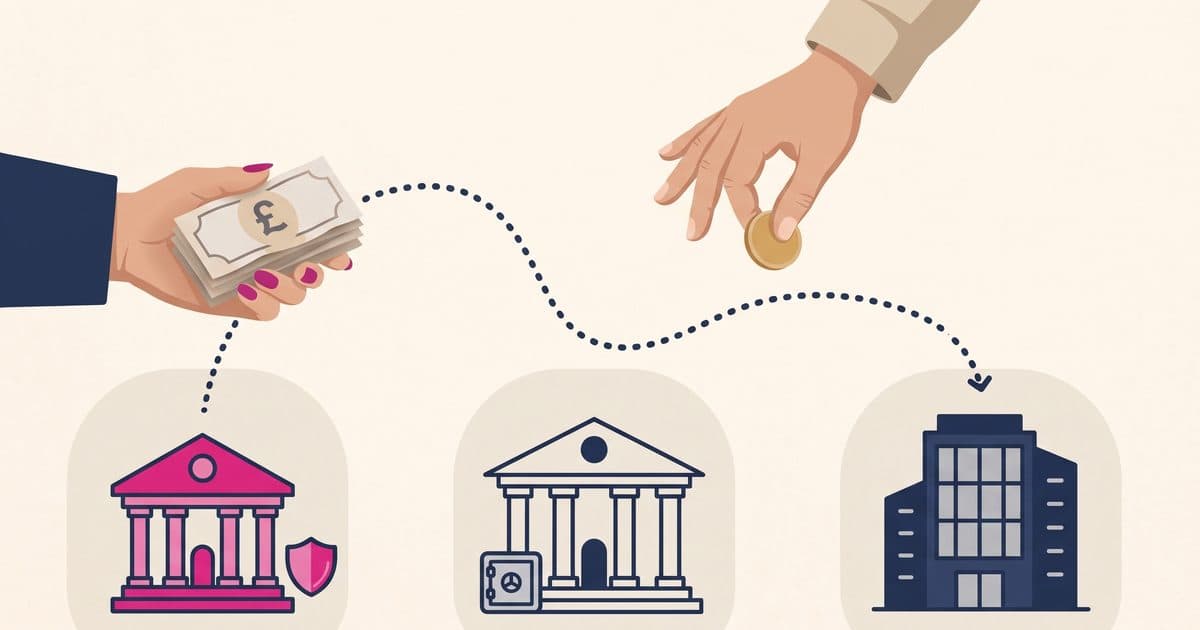
Since 7 October 2024, UK banks have had to refund victims of bank transfer scams. That is, when you make the transfer yourself, with your own click, but you've been tricked into it. It's called an APP scam (authorised push payment), and the limit is £85,000 per claim.
I made my transfer on 19 December 2024. Two and a half months after the rule came in. I didn't know it at the time; today I consider it the luckiest coincidence of my financial life.
The conditions that matter:
You have 13 months from your last payment to claim.
It covers individuals, micro-enterprises and charities. My contract was in my company's name, I paid from my company's account and my company sells services, so I was covered.
It doesn't cover "civil disputes": a genuine investment that simply goes wrong. You have to prove it was a scam. That's where the whole battle is.
Nor does it cover "gross negligence", such as ignoring very clear warnings from your bank.
My process, step by step
Reporting it.
I contacted the police when I found the victims' WhatsApp group. They told me that was the first step and walked me through what to do.
Today you report it to Report Fraud, which replaced Action Fraud.
They give you a reference number that everyone will ask you for.
The claim to my bank.
First answer, in writing: no.
According to them, because the solicitor's firm was a reliable, legitimate business, they couldn't refund me. Exactly what I thought when I made the transfer.
The Financial Ombudsman.
If your bank says no, or doesn't reply within eight weeks, you can go to the Ombudsman.
It's free, and you have six months from the bank's final response.
I filed my case on 28 May 2025. At first, cases like mine were being rejected too. That changed when the police stepped in (step 5).
My MP.
I wrote to my MP. I'd never done it before. It turns out they reply, and faster than my bank.
She can't order a bank to do anything, but she asked the payments regulator in writing to clarify whether having a solicitor in the middle cancelled the APP scam protection. The answer was no.
She also wrote to the head of the Ombudsman to ask for clarification. An MP isn't in charge, but a letter from one gets read differently.
And it didn't stop at a reply. She met me in person several times, and her team, with an efficiency that surprised me, kept following up by email. She went to a lot of trouble to help me, and I'm truly grateful.
The police.
They decided to step in and met the Ombudsman to show them the details of the case.
From then on, the Ombudsman started upholding our claims.
The payout.
The Ombudsman's investigator found in my favour. The bank didn't accept it, so the case was escalated to a final decision by an ombudsman, which is legally binding on the bank if you accept it.
The final decision arrived on 29 June 2026 and found in my favour again.
By 21 July I had the money in my account: a year and seven months after the transfer.
On top of that, the Ombudsman made the bank pay me interest for the time between the two decisions: about £2,000. Digging its heels in cost it.
Along the way I also opened a case against the deal sourcer with her redress scheme, the Property Redress Scheme. My argument: she had earned commission on an investment in which I lost everything. They awarded me £1,000. It's not much, but that scheme turned out to be more useful than I expected.
And I declared it in my claim to the bank. If you recover anything on your own, always tell your bank, the Ombudsman and the police. Hiding it can sink your whole case.
I also opened a case against the company with the Property Redress Scheme, because it was a member too. They ruled in my favour: it owed me £25,000, the most they can award. I turned it down. Accepting it would have closed the case as a full and final settlement and shut the door on recovering the money by other routes. Even so, the decision still helps me in other claims. Besides, I'd never have been paid: the police had frozen its accounts, and shortly afterwards it went into liquidation.
Other things I tried
The liquidators. When a company goes bust, you can register what it owes you so you get paid when whatever is left is shared out. I did. The company is still in liquidation, but there isn't enough money left in its accounts to pay all the victims.
Trading Standards. I reported it there too. They did nothing.
The Legal Ombudsman. It turned down my complaint against the solicitor because I wasn't her client. I covered that in the previous post.
Waiting. For a month I believed the company director's reassuring email. It was a month wasted.
Why others didn't get theirs back
Some victims still haven't recovered their money. The reasons I know of:
The contract and the account didn't match. They signed in their company's name and paid from their personal account, or the other way round. That makes claiming much harder.
Their bank wasn't covered by the rule. The refund requirement doesn't reach every provider. If your bank isn't in it, that route is closed.
Their company didn't count as a micro-enterprise. For the rule and for the Ombudsman, a company only counts as a micro-enterprise if it sells goods or services to customers. Companies set up for this investment, doing nothing else, were left out for that reason, not because anyone doubted it was a scam. As far as I know, the same happened to investment companies that don't trade. There were rejections for other reasons too. Some of these people went back to their banks: some succeeded and some didn't.
If it's just happened to you
Report it to the police through Report Fraud and keep the reference.
Claim from your bank in writing as soon as possible. Use the words "APP scam reimbursement".
If it says no, go to the Financial Ombudsman.
Write to your MP. It costs you one email.
If there were middlemen, complain to their redress schemes. Property agents have to belong to one of the two there are: the Property Redress Scheme or The Property Ombudsman.
If you think a middleman was negligent, as the solicitor was in my case, report them to their regulator so it opens an investigation. The SRA has a compensation fund, but it covers dishonesty, not negligence, and it's a last resort.
Find other victims. I wouldn't have got there alone.
Keep everything: contracts, emails, screenshots, statements.
Be wary of anyone offering to recover your money for an upfront fee. The police warned us about this several times. After a scam, you're the perfect target for the next one.
If they won't show you the documents, I'd be wary.
Where all this comes from
Payment Systems Regulator: mandatory reimbursement for bank transfer scams since 7 October 2024, with an £85,000 limit and a 13-month deadline. PSR
Financial Ombudsman Service: the eight-week and six-month time limits for a complaint. Time limits
Report Fraud: the fraud reporting service that replaced Action Fraud. Report Fraud
Property Redress Scheme and The Property Ombudsman: the two redress schemes for property agents. Property Redress Scheme · The Property Ombudsman
Financial Ombudsman Service: who counts as a micro-enterprise. Who we can help
Did this article help?